


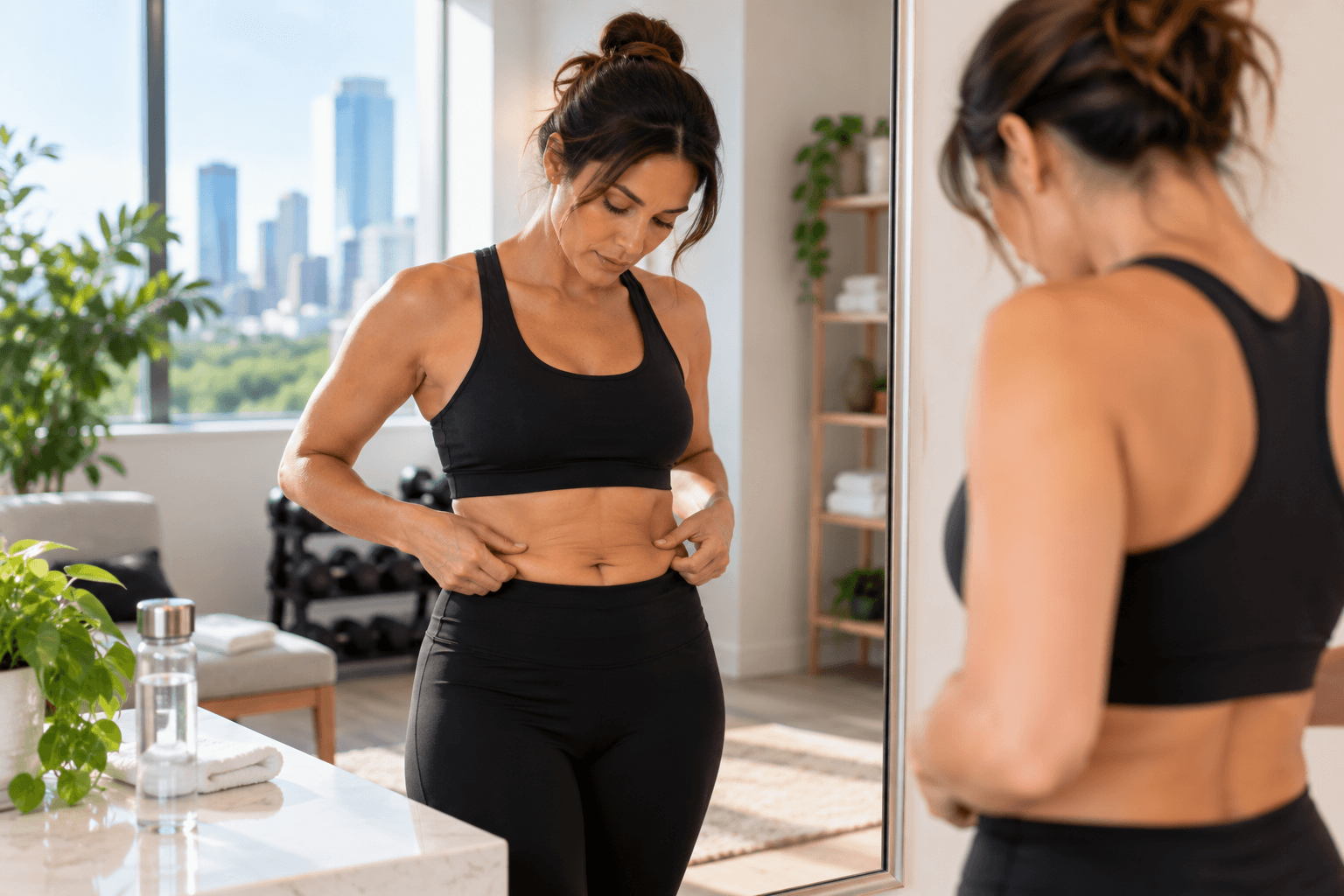
You have put in the work. Maybe you lost a significant amount of weight, changed your diet, or finally found a workout routine that stuck. And yet there is still that pocket of fat around the abdomen that will not budge, or skin that looks looser and less firm than the number on the scale would suggest. This is one of the most common frustrations people bring to a plastic surgery consultation, and it is rarely about effort. It is about biology.
This article breaks down why loose skin and stubborn fat happen in the first place, what separates a diet and exercise problem from a skin and tissue problem, and how body contouring can help close that gap. Updated this August 2026 for Houston, Texas readers researching their options at Dr. Roth Plastic Surgery.
Why Does Skin Stay Loose Even After Weight Loss?
Skin has a natural amount of elasticity thanks to collagen and elastin fibers, but that elasticity has limits. When skin is stretched significantly, whether from weight gain, pregnancy, or simply years of gravity, and then that volume disappears through weight loss, the skin does not always spring back into place.
Age Plays a Bigger Role Than Most People Realize
Collagen production naturally declines starting in your mid to late 20s and continues to drop with each passing decade. A 25 year old and a 55 year old who lose the same amount of weight will often see very different results in terms of how their skin responds.
The Speed of Weight Loss Matters
Rapid weight loss, whether through significant dietary changes, medication, or bariatric surgery, tends to leave more excess skin behind than slower, more gradual weight loss, simply because the skin has less time to adapt.
Genetics Set the Baseline
Some people are genetically predisposed to more resilient, elastic skin, while others notice looseness and sagging much earlier or more dramatically than their peers, even with similar lifestyles.
Why Does Some Fat Refuse to Respond to Diet and Exercise?
Not all fat behaves the same way. Visceral fat, the kind that surrounds internal organs, tends to respond fairly well to diet and cardiovascular exercise. Subcutaneous fat, the layer just beneath the skin, is a different story.
Fat Distribution Is Largely Genetic
Where your body tends to store fat, whether that is the abdomen, flanks, thighs, or upper arms, is determined significantly by genetics and hormones. This is why two people with similar body fat percentages can carry weight in completely different places.
Hormonal Shifts Change the Picture
Hormonal changes tied to pregnancy, menopause, or thyroid function can cause fat to redistribute in ways that no amount of exercise fully reverses, since the underlying hormonal environment is driving the storage pattern.
Localized Fat Cells Can Be Resistant
Certain areas of the body simply hold onto fat cells more stubbornly than others, a pattern well documented in clinical research and one of the primary reasons body contouring procedures exist in the first place.
What Are the Signs That Body Contouring Might Be Worth Exploring?
A few patterns tend to show up in people who eventually look into professional treatment rather than continuing to rely on diet and exercise alone.
Skin That Hangs or Folds, Rather Than Just Feeling Soft
Loose, hanging skin, particularly around the abdomen, upper arms, or inner thighs, is a texture and structural issue that exercise cannot correct, since there is no muscle to tone underneath excess skin.
Fat Pockets That Persist Despite a Healthy Weight
If you are at a stable, healthy weight but still notice specific areas that look disproportionate or resistant to change, that is often a sign of localized fat rather than an overall weight issue.
Clothing Fit Issues in Specific Areas
Many people notice contouring concerns first through clothing, such as pants that fit everywhere except the waist, or sleeves that feel tight around the upper arm even as the rest of the body has slimmed down.
What Does Body Contouring Actually Involve?
Body contouring is a broad term covering both surgical and non-surgical approaches to reshaping the body once diet and exercise have done what they can. At Dr. Roth Plastic Surgery, the approach depends heavily on how much of the concern is excess skin versus excess fat, and how much correction the patient is looking for.
Non-Surgical Options
For patients dealing primarily with mild to moderate skin laxity and looking to avoid a lengthy recovery, BodyTite uses radiofrequency energy to tighten skin and reduce fat with minimal downtime, often described as a non-surgical alternative for people who are not ready for a full surgical procedure.
Surgical Options
For more significant excess skin or fat, liposuction removes stubborn fat deposits directly, while procedures like abdominoplasty, arm lift, thigh lift, and back lift surgery are designed specifically to remove excess skin that will not tighten on its own.
How Do You Know Which Approach Is Right for You?
The honest answer is that it depends on your specific tissue quality, the amount of excess skin versus fat, and your goals for recovery time. Someone with mostly stubborn fat and good skin elasticity may be a strong candidate for a less invasive approach, while someone with significant loose skin after major weight loss will likely need a surgical solution to achieve the tightening they are looking for. A consultation, rather than guesswork, is really the only reliable way to know.
What Should You Expect During Recovery?
Recovery varies enormously depending on which body contouring approach you pursue. Non-surgical treatments like BodyTite typically involve a few days of swelling and minimal downtime, while surgical procedures involve a longer recovery measured in weeks, with activity restrictions that gradually lift as healing progresses. Your surgeon will walk you through a specific timeline based on the procedure and areas being treated.
Why This Conversation Is Picking Up Steam in Houston
Houston has seen a noticeable rise in interest around body contouring in recent years, driven partly by more people achieving significant weight loss through lifestyle changes and medical support, and partly by a broader cultural shift toward talking openly about post-weight-loss skin and body image. The good news is that there are more options today than ever before, ranging from minimally invasive treatments to more comprehensive surgical solutions.
Bottom Line: Your Body Isn't Broken, It's Just Behind on the Memo
Loose skin and stubborn fat are not a reflection of how hard you have worked. They are a reflection of biology, genetics, and sometimes just the pace at which your body changed. Once you understand what is actually happening beneath the surface, choosing the right path forward becomes a lot less overwhelming.
If you want to talk through which body contouring option lines up with your specific situation, the team at Dr. Roth Plastic Surgery can walk you through a personalized plan, and you can book a consultation whenever you are ready.
Frequently Asked Questions
Is body contouring the same as weight loss? No. Body contouring is designed for people who are already at or near a stable, healthy weight but have specific areas of loose skin or stubborn fat that diet and exercise have not resolved. It is a shaping and tightening process, not a weight loss method.
How much loose skin is normal after weight loss? Some degree of loose skin is common after significant weight loss, especially if the loss happened quickly or later in life. The amount varies widely based on genetics, age, and how much weight was lost.
Can body contouring be done without surgery? Yes, treatments like BodyTite use radiofrequency energy to tighten skin and reduce fat with less downtime than traditional surgery, though results are generally more modest than surgical options for significant excess skin.
How long do body contouring results last? Results can last for years, particularly if your weight stays relatively stable, though the natural aging process will continue and may require touch up treatments down the line for some patients.
Do I need to be at my goal weight before considering body contouring? Most surgeons recommend being at or close to a stable weight for several months before pursuing body contouring, since significant future weight changes can affect the results.