OCTOBER BREAST PROCEDURE SPECIAL
RECEIVE 10% OFF ANY BREAST PROCEDURE WITH DR. ROTH THIS OCTOBER

Define Your Arm Contours

An arm lift (brachioplasty) is a surgical procedure that removes excess skin and, when needed, fat from the inner and posterior upper arm. Dr. Forrest S. Roth, MD, FACS — a board-certified plastic surgeon in River Oaks, Houston, TX — performs brachioplasty most often for patients who have experienced significant weight loss or age-related skin laxity that cannot be corrected with exercise alone. The procedure tightens the underlying tissue and reshapes the arm from the axilla (armpit) to the elbow for a smoother, more defined contour.


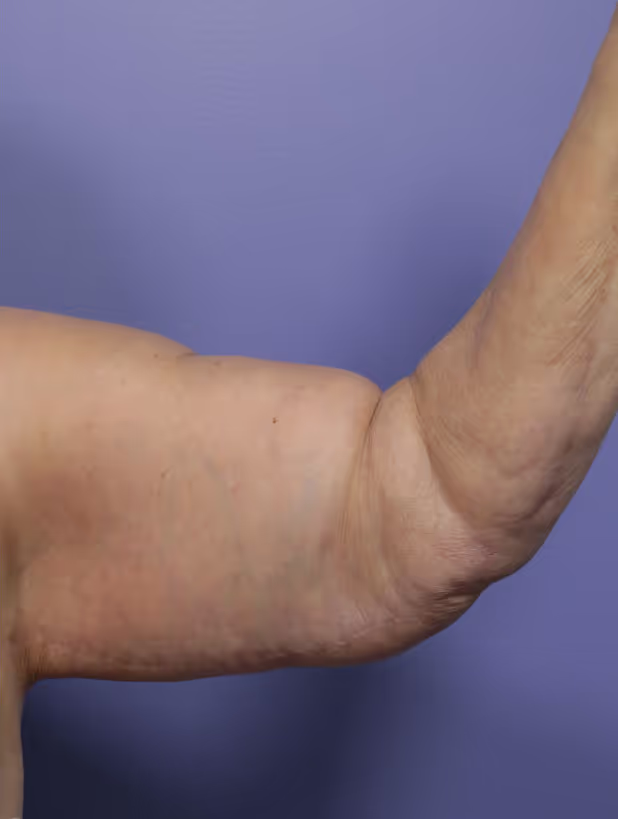
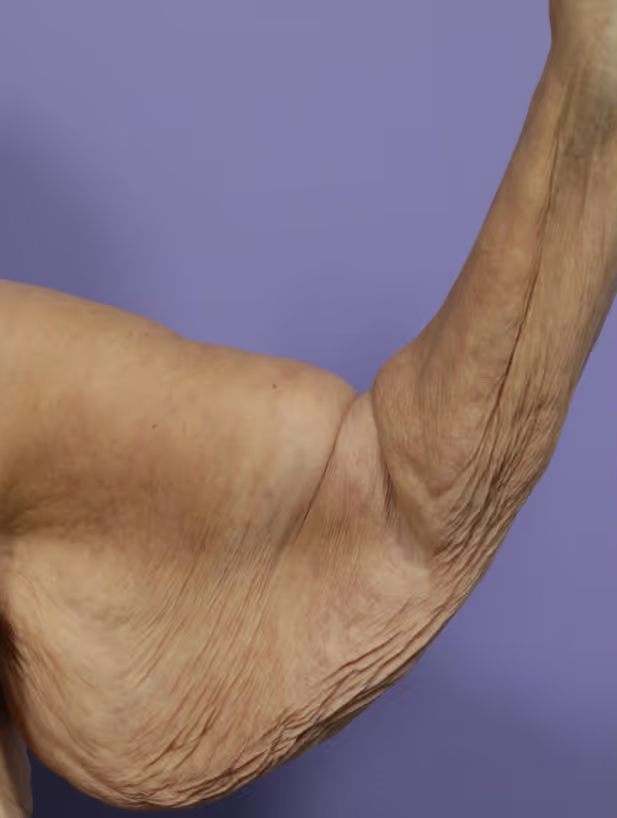
Most patients return to desk work within 7–10 days and avoid heavy lifting or strenuous arm activity for 4–6 weeks. The brachioplasty scar runs along the inner arm — its visibility depends on incision length and arm position, and it continues to fade for up to two years. When excess fat is also present alongside loose skin, Dr. Roth may incorporate liposuction into the procedure for a more comprehensive result.

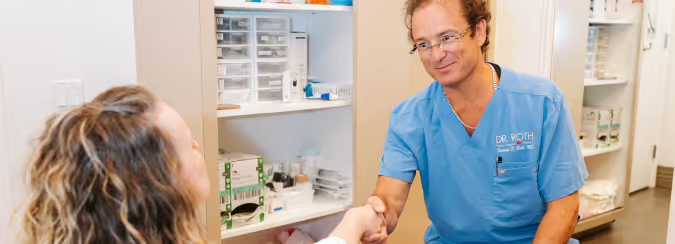


Dr. Forrest S. Roth finds that brachioplasty candidates most commonly include patients who have lost a significant amount of weight (including those who have had bariatric surgery), individuals experiencing age-related skin laxity in the upper arms, or patients with inherited skin looseness that persists despite regular exercise. Ideal candidates are at or near their goal weight and in good overall health before proceeding.
Dr. Roth tailors the incision length to the degree of skin excess. For mild laxity, a shorter incision hidden in or near the armpit may be sufficient. For moderate to significant sagging, the incision extends along the inner arm from the axilla toward the elbow. Excess skin is excised, the underlying fascia may be tightened for support, and the remaining skin is re-draped for a smooth contour.
Most patients treated by Dr. Forrest S. Roth, MD, FACS return to light desk work within 7–10 days. Lifting, reaching overhead, and strenuous arm activity are restricted for 4–6 weeks. Arms will feel tight and swollen in the first week; bruising and swelling typically resolve over 3–4 weeks. Compression garments are worn as directed during the healing period.
A brachioplasty scar is a known trade-off of the procedure. Dr. Roth places the incision along the inner aspect of the arm (the bicipital groove) so it is less visible when the arms rest at the sides. For full brachioplasty, the scar runs from the armpit toward the elbow. It will be pink and slightly raised in the first months, then progressively flatten and fade over 12–24 months. Silicone scar treatment and sun protection support the best outcome.
Improved arm contour is visible soon after surgery, though swelling and compression garments affect the early result. Dr. Forrest S. Roth advises patients to expect the final shape — with settled tissues and substantially faded scars — to emerge over approximately 3–6 months. Patients who remain at stable weight after surgery maintain long-lasting results.
Yes. When patients have both excess skin and residual fat deposits in the upper arms, Dr. Forrest S. Roth may combine brachioplasty with liposuction in a single procedure. Liposuction alone is appropriate when skin elasticity is good; brachioplasty is needed when significant laxity is present. Arm lift is also frequently performed as part of a comprehensive body contouring plan following major weight loss, where multiple areas — such as the abdomen, thighs, or back — are addressed together.