


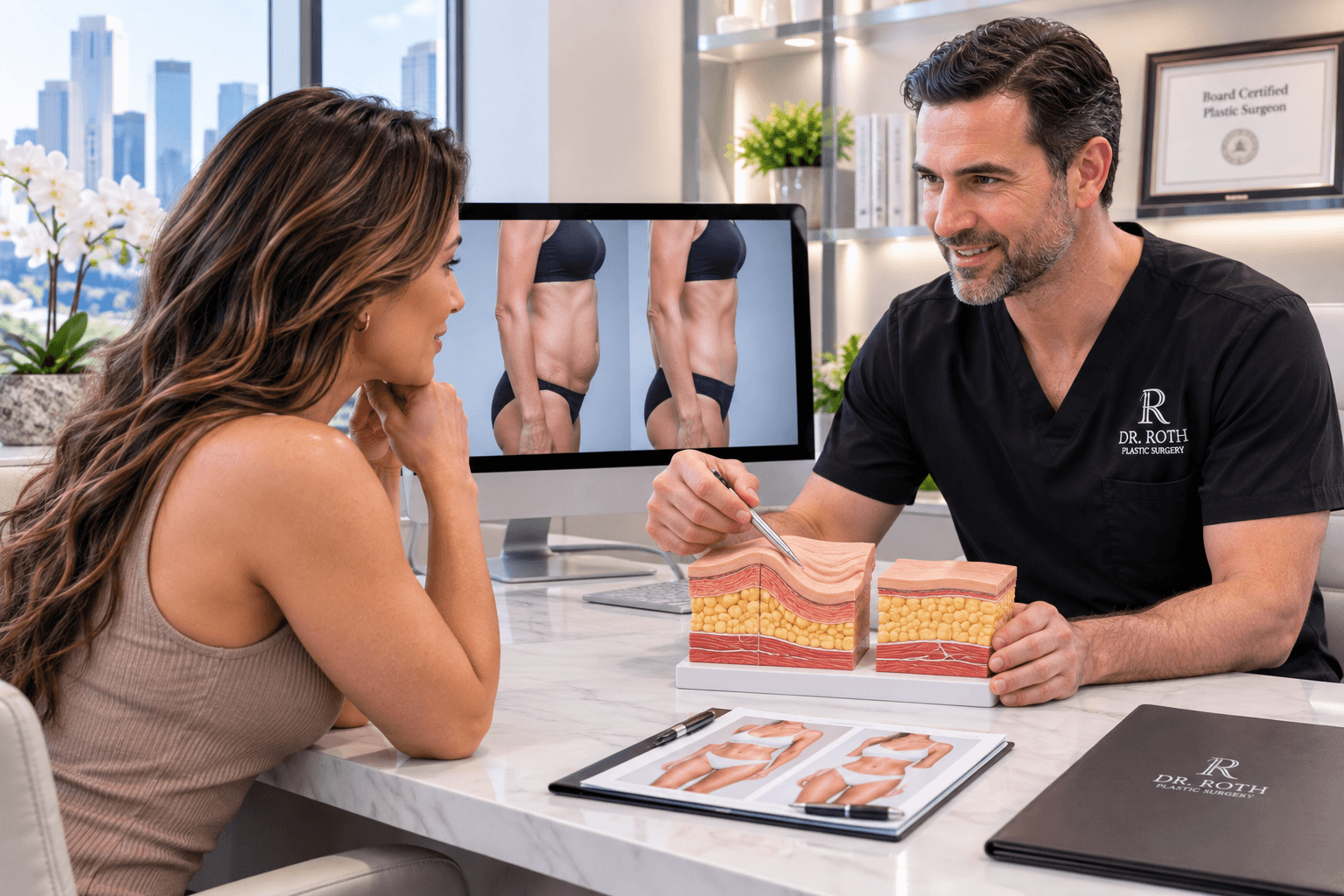
You've been putting in the work. The workouts, the meal prepping, the discipline. And yet there's still that pocket of fat around your midsection that won't budge, or maybe it's the loose skin left behind after pregnancy or a major weight loss that no amount of core exercises seems to tighten back up. If this sounds familiar, you're not alone, and you're definitely not doing anything wrong. Some changes to the body simply can't be reversed through diet and exercise alone, no matter how consistent you are.
This is exactly why so many people in the Houston area start researching body contouring in Houston, often after months (or years) of frustration with a body that no longer responds the way it used to. Below, we'll walk through what actually causes loose skin and stubborn fat, when it's time to consider professional help, and which body contouring options are worth understanding before you make a decision.
What Causes Loose Skin and Stubborn Fat in the First Place?
Before jumping to solutions, it helps to understand why this happens. Skin laxity and stubborn fat pockets usually come from one or more of the following:
Does Pregnancy Permanently Change Skin and Muscle Tone?
Pregnancy stretches the skin and abdominal muscles significantly over nine months, and while the body does its best to bounce back afterward, the skin's elastic fibers and the connective tissue between the abdominal muscles don't always fully recover. This is why so many moms are left with a soft, protruding belly and loose skin even after they've returned to their pre-pregnancy weight.
Why Doesn't Skin Snap Back After Major Weight Loss?
When someone loses a large amount of weight, whether through lifestyle changes, bariatric surgery, or medication, the skin that stretched to accommodate the extra volume often doesn't shrink back down proportionally. Skin has a certain amount of elasticity, but once it's been stretched significantly or for a long period, that elasticity diminishes and the skin is left hanging loosely over the new, smaller frame.
Is Stubborn Fat Just About Willpower?
Not at all. Genetics play a large role in where the body stores fat, and certain areas (the lower abdomen, flanks, inner thighs, and upper arms are common culprits) are simply more resistant to diet and exercise than others. This is because fat cells in those regions can be less responsive to the hormonal signals that trigger fat burning, regardless of how disciplined someone's routine is.
How Does Aging Affect Skin Elasticity?
As we age, the body produces less collagen and elastin, the proteins responsible for keeping skin firm and bouncy. Combined with years of sun exposure and natural volume loss, this gradual decline means skin that once snapped back into place after weight fluctuations now tends to sag instead.
When Are Diet and Exercise No Longer Enough?
If you've been consistent with your nutrition and fitness routine for six months or longer and you're still seeing the same loose skin or fat pockets, it's a good sign that the issue isn't about effort. Diet and exercise can reduce overall body fat and build muscle, but they cannot tighten excess skin, and they can't selectively target genetically stubborn fat deposits. At that point, it's reasonable to start exploring professional body contouring options rather than continuing to chase results that exercise alone can't deliver.
It's also worth having a conversation with a board certified plastic surgeon if you've noticed skin irritation, rashes, or discomfort under areas of loose or hanging skin, since these are physical signs that skin laxity has become more than just a cosmetic concern.
What Body Contouring Options Actually Exist?
The good news is that there isn't a single answer here. Depending on how much skin laxity or fat is present, and how much downtime you're able to take, there are several paths worth understanding.
What Is BodyTite and How Is It Different From Surgery?
BodyTite uses radiofrequency energy to melt fat and tighten the underlying skin at the same time, all through a tiny incision rather than a large surgical cut. It's considered a minimally invasive body contouring option, which means shorter recovery time compared to traditional surgery, while still delivering noticeable improvements in skin tightness and contour, particularly for patients with mild to moderate laxity.
How Does Liposuction Compare to BodyTite?
Liposuction is primarily focused on removing unwanted fat deposits rather than tightening skin. It remains one of the most effective ways to address stubborn fat pockets that haven't responded to diet and exercise, especially in areas like the abdomen, flanks, thighs, and arms. For patients who have good skin elasticity and mainly want fat reduction, liposuction alone can produce excellent results. For those with more noticeable skin laxity, it's sometimes combined with BodyTite or a skin excision procedure for a more complete outcome.
When Is Abdominoplasty the Right Choice Instead?
Abdominoplasty, commonly known as a tummy tuck, is the most comprehensive option when there's significant excess skin, particularly after pregnancy or major weight loss, along with weakened or separated abdominal muscles. Unlike BodyTite or liposuction, abdominoplasty physically removes the excess skin and repairs the underlying muscle wall, which makes it the better option when skin laxity (not just fat) is the primary concern.
Are There Other Areas Beyond the Abdomen That Can Be Addressed?
Yes. Loose skin and stubborn fat aren't limited to the midsection. Many patients also explore an arm lift to address sagging skin along the upper arms, or a thigh lift for excess skin and tissue in the inner or outer thighs, especially following significant weight loss. These are genuinely offered as part of a broader body contouring approach and can be discussed alongside or separately from abdominal procedures.
What Should You Expect During Recovery?
Recovery varies quite a bit depending on which option you choose. BodyTite typically involves a shorter recovery period, often with patients returning to light activity within a week or two, though swelling and final results continue to improve over the following months. Liposuction recovery timelines are fairly similar, with most people back to normal routines within one to two weeks, while more strenuous activity is held off for a bit longer. Abdominoplasty, being a more involved surgical procedure, requires a longer recovery, generally several weeks, with restrictions on heavy lifting and strenuous exercise during the initial healing phase.
In every case, following your surgeon's post-procedure instructions closely, including wearing any recommended compression garments and attending follow-up appointments, plays a major role in how smoothly recovery goes and how the final results look.
Who Is a Good Candidate for Body Contouring?
Generally speaking, good candidates for body contouring houston procedures are people who are at or near a stable, healthy weight, are in good overall health, and have realistic expectations about what each procedure can accomplish. Body contouring is designed to refine and reshape areas that haven't responded to lifestyle changes, not to serve as a substitute for significant weight loss.
Non-smokers tend to heal more predictably, and patients without uncontrolled medical conditions are typically better suited for surgical options like abdominoplasty. For those unsure which procedure fits their situation, a consultation is the best way to get a personalized recommendation based on skin quality, fat distribution, and goals.
If any of the concerns discussed here sound familiar, whether it's loose skin after pregnancy, stubborn fat that won't respond to exercise, or skin that's lost its elasticity with age, know that these are common, well understood issues with real solutions. Many Houston patients have found that a thoughtful, personalized approach to body contouring in Houston makes a meaningful difference, and Dr. Roth's practice has continued refining these techniques, updated for August 2026, to reflect the latest approaches in skin tightening and fat reduction.
You can also read more about related concerns and solutions in these posts: what causes loose skin and how body contouring addresses it, and how body contouring in Houston is redefining aging skin.
Ready to Stop Guessing and Start Sculpting? Here's Your Next Move
There's no prize for pushing through frustration alone when there are real, proven options available. If loose skin or stubborn fat has been holding back your confidence, the best next step is simply having a conversation with someone who can look at your specific situation and lay out what's realistic. Visit the Dr. Roth Plastic Surgery homepage to learn more about the practice, or go ahead and book a consultation with Dr. Roth to talk through which body contouring option makes sense for you. You can also reach out directly through the contact page with any questions before you decide. Either way, the sooner you start the conversation, the sooner you'll have a clear plan instead of just another round of guesswork.
Frequently Asked Questions
What is the difference between surgical and non-surgical body contouring options? Surgical options like abdominoplasty involve removing excess skin and repairing muscle through incisions, while minimally invasive options like BodyTite use radiofrequency energy through a small incision to tighten skin and reduce fat with less downtime. Liposuction falls somewhere in between, using small incisions to remove fat without addressing skin laxity directly.
Am I a good candidate for body contouring in Houston? Good candidates are typically at a stable, healthy weight, in good general health, and dealing with localized fat or loose skin that hasn't responded to diet and exercise. A consultation is the most reliable way to know which option, if any, fits your goals.
How long is recovery after a body contouring procedure? Recovery depends on the procedure. BodyTite and liposuction generally involve one to two weeks before returning to normal activities, while abdominoplasty recovery usually takes several weeks due to its more involved surgical nature.
When will I see final results after body contouring? Swelling needs time to resolve, so while initial improvements are often visible within a few weeks, most patients see their final, settled results within three to six months, depending on the procedure performed.
Can BodyTite, liposuction, and abdominoplasty be combined? Yes, many patients combine procedures, such as liposuction with BodyTite, or abdominoplasty with an arm lift or thigh lift, to address multiple areas of concern in a coordinated treatment plan discussed during consultation.
Does body contouring help with loose skin after pregnancy or weight loss? It can, depending on the amount of excess skin present. Abdominoplasty is typically recommended for more significant skin laxity after pregnancy or major weight loss, while BodyTite may be suitable for milder cases where skin quality is still relatively good.